LA Roots Run Deep
Consider this blog post a "side quest" in the Jack Emme project.
Half the letters we have that Jack Emme wrote were written to the Lindenfeld's. Jack's mother Margaret Kieffer had one sister and two brothers (Mary, Joseph and Otis). Her sister Mary Kieffer was married to John Lindenfeld. Their daughter was Sister Mary Joanne. Jack and Mary Joanne were very close. In later years she made the trip to France and visited Jack's burial place, taking photographs of his headstone.
This "side quest" is to finally photograph some Lindenfeld family artifacts that were loaned to me by Terri Laurman years ago. Artifacts have more value when they have context and these objects are steeped in Los Angeles history from the late 19th Century...so what follows is the context.
German Families in Los Angeles
This photo shows a mix of the Emmes, Lindenfelds and Kieffers at a picnic lunch in the 1950's. The Emmes and Lindenfelds are surrounded by daughters, nieces and nephews from all three clans.

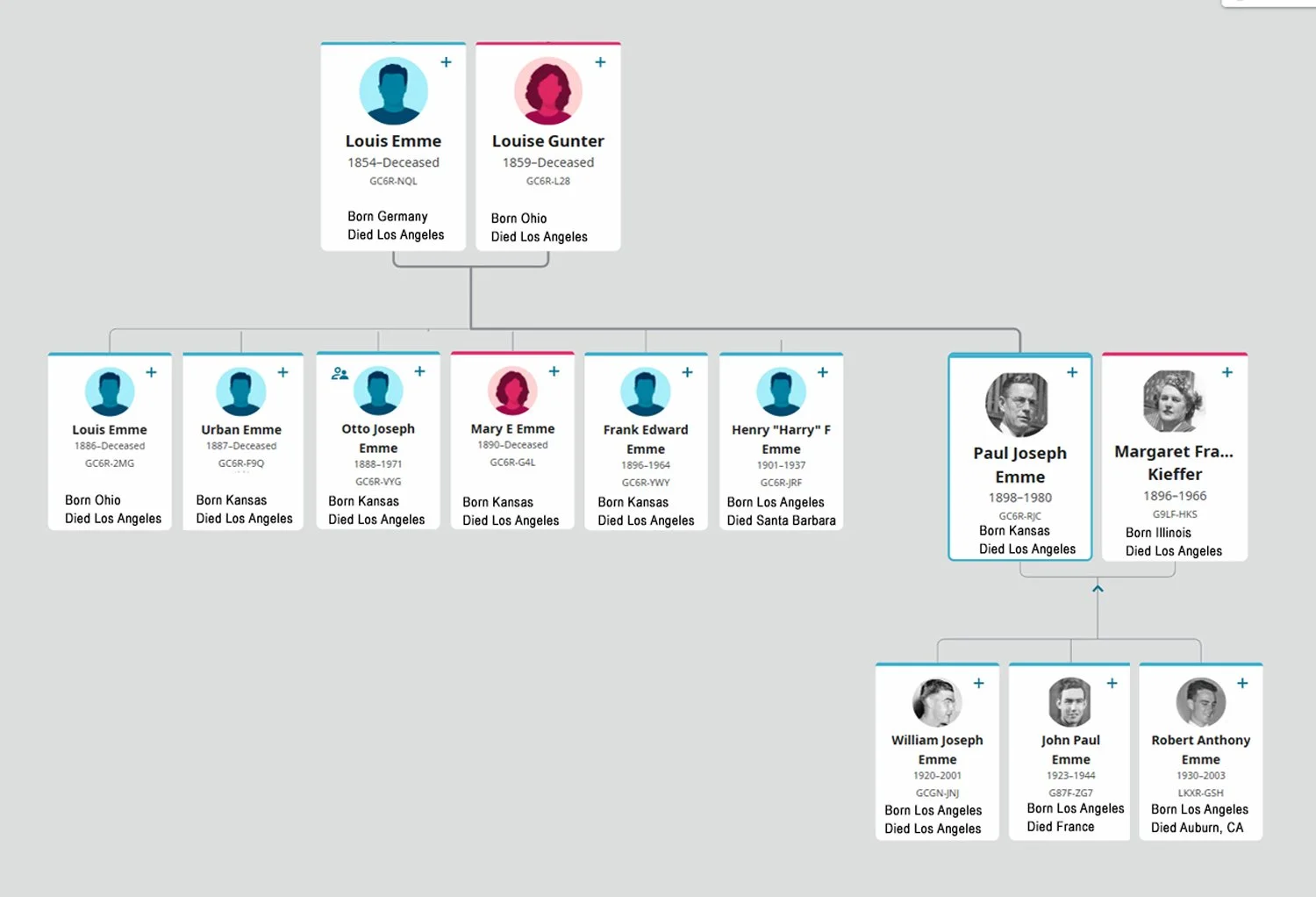
If you look at the family trees for the Emmes and Lindenfelds you can see they had a lot in common. Both were large Catholic German families with fathers who immigrated from Germany. By 1901 both families were in Los Angeles. The Lindenfelds were in Los Angeles in the 1880's and all six of their children were born there between 1886 and 1901. The Emme's started out in Ohio and Kansas and only their youngest son Henry was born in Los Angeles after they moved there.


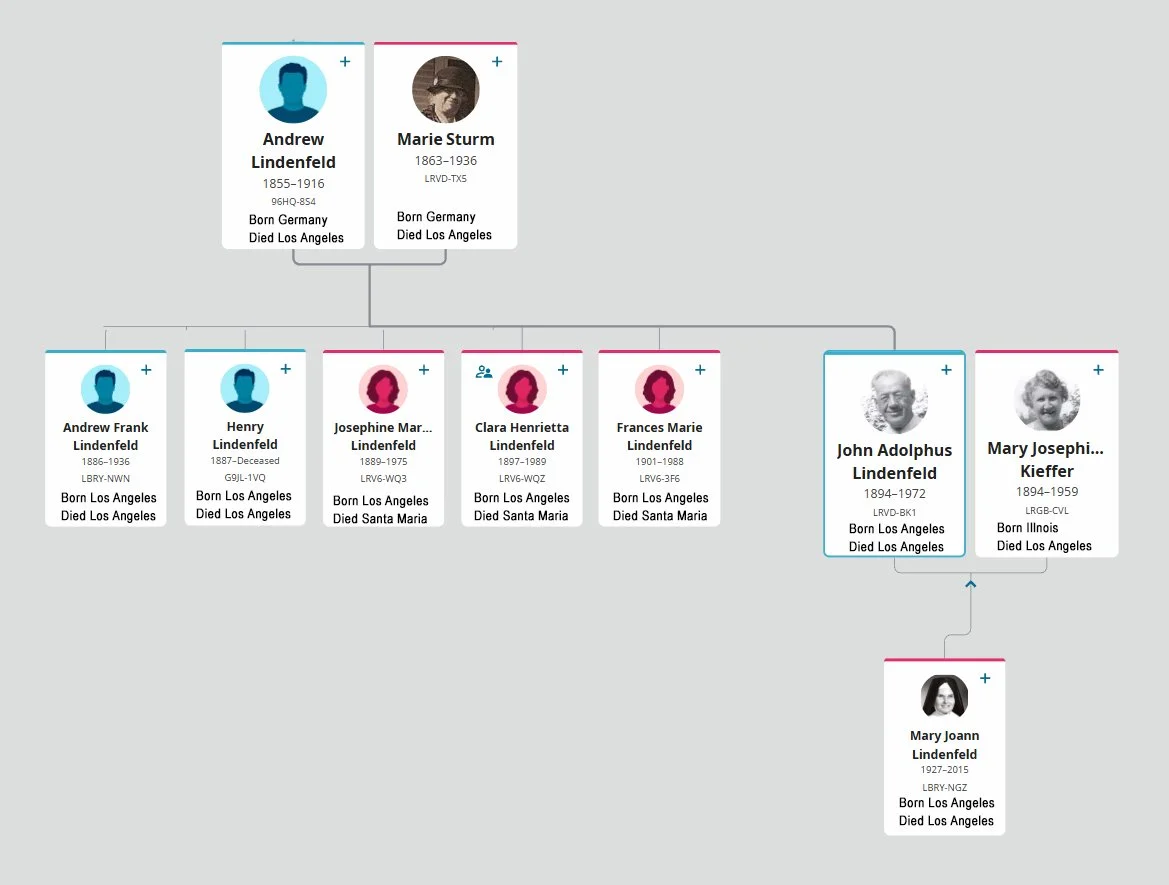
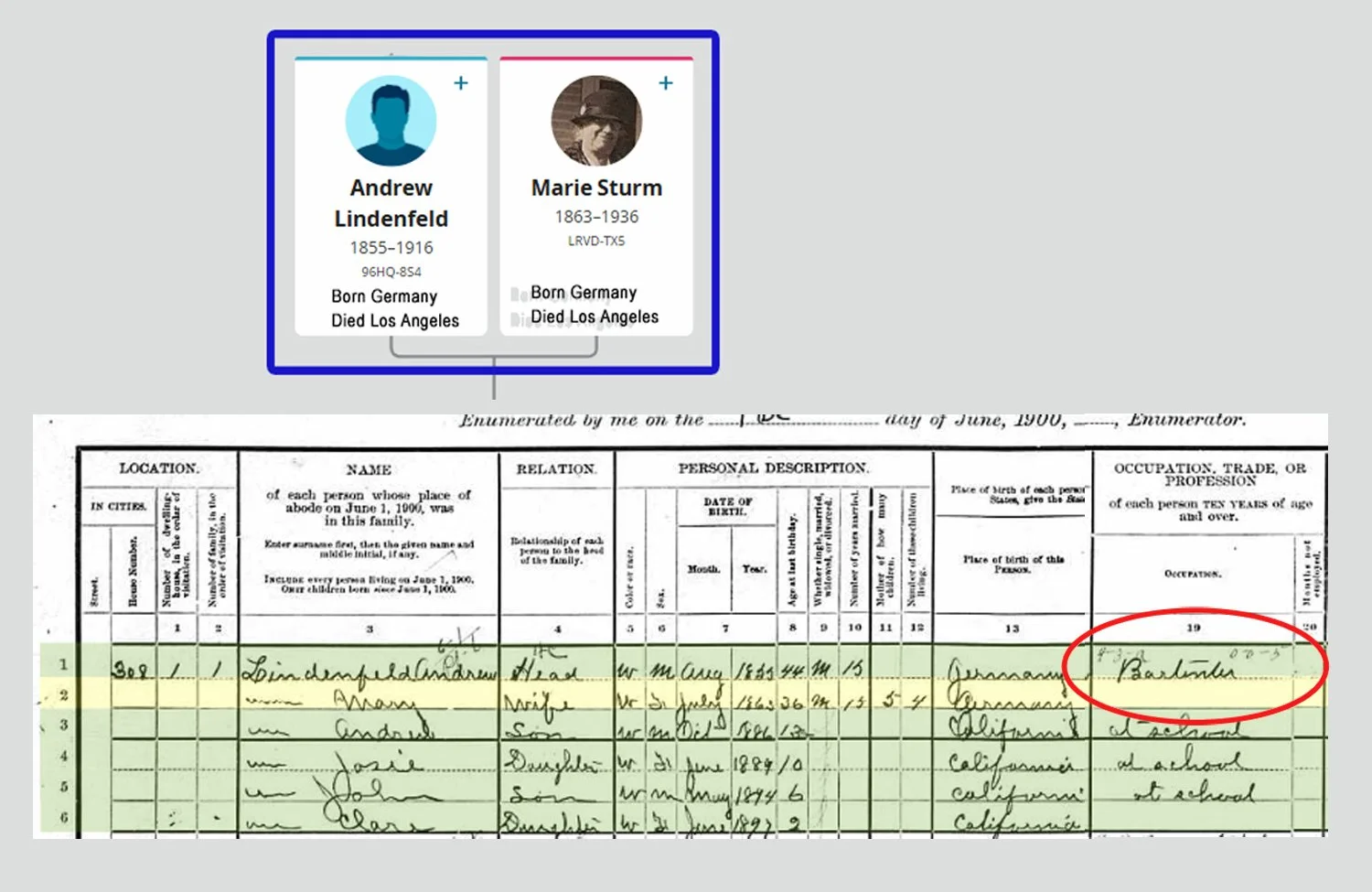
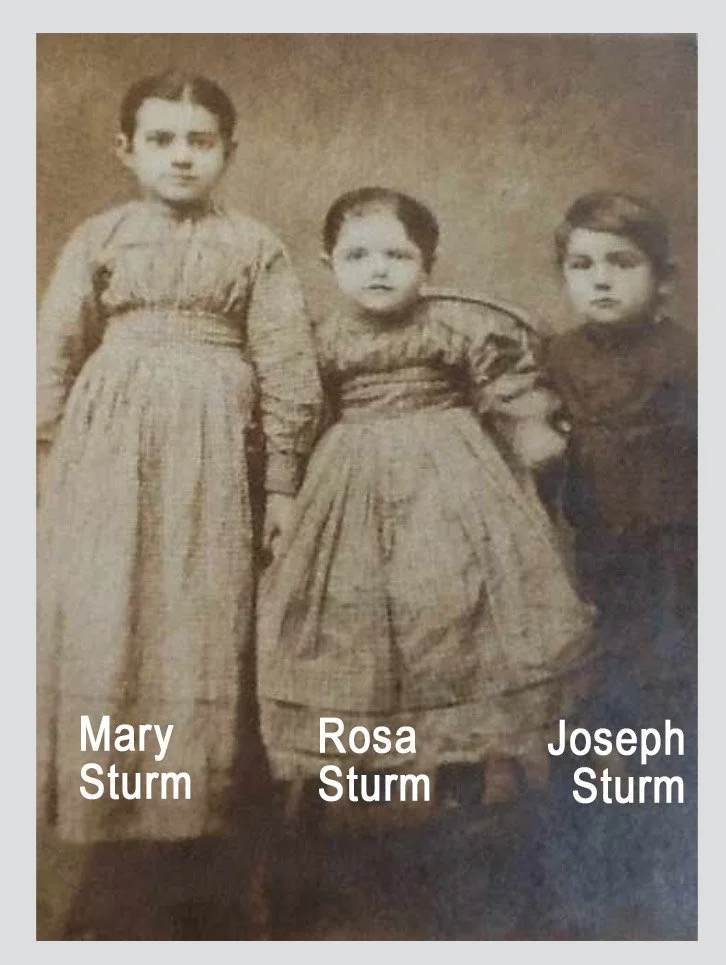
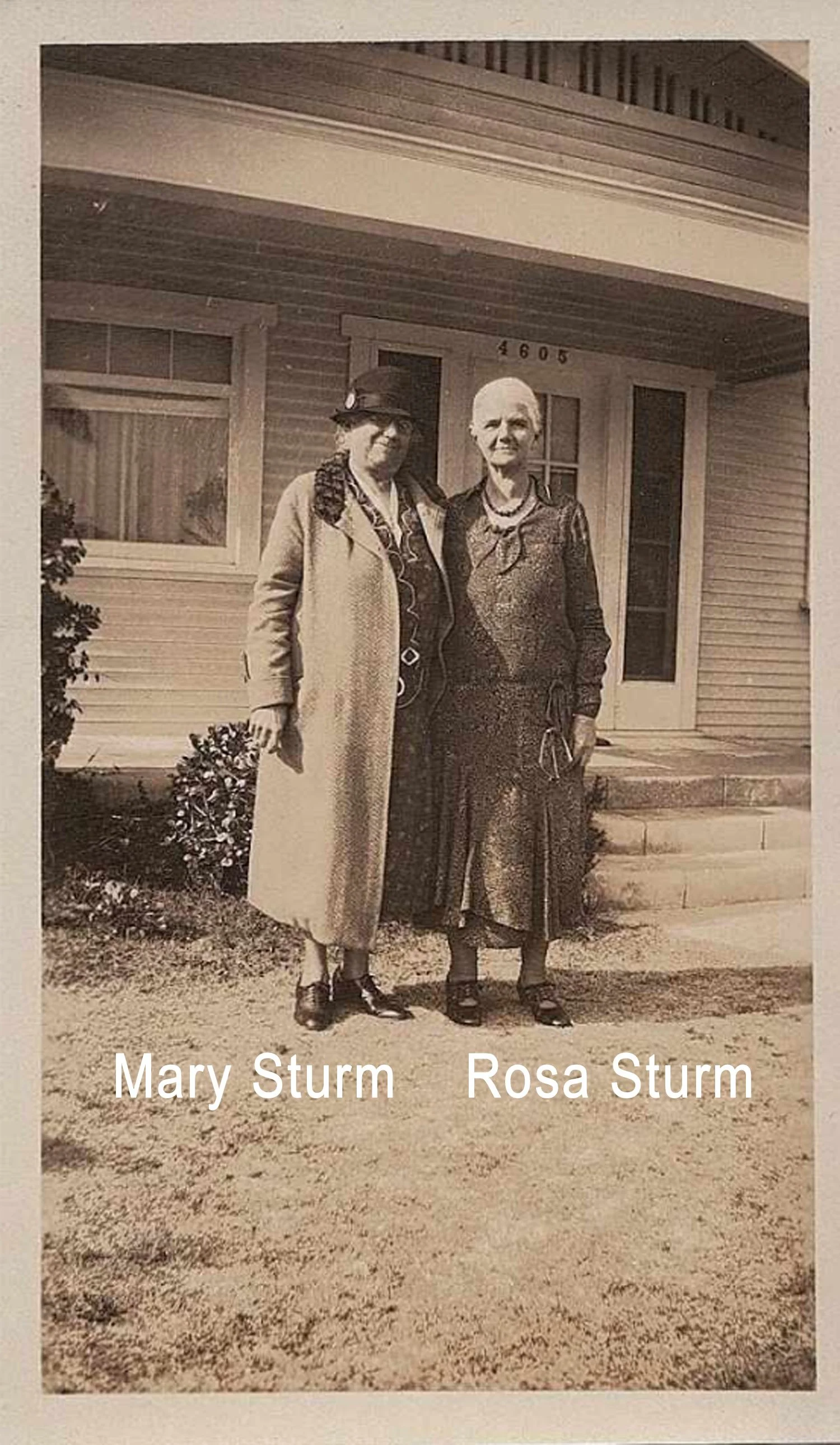
Andrew Lindenfeld and Mary (Marie) Sturm were married in Los Angeles in 1885. I was able to find a few photographs online of Mary Sturm and her siblings, Rosa and Joseph. I also found the Census of 1900 where Andrew showed his occupation as Bartender.


The Lindenfeld & Co Building
Thanks to a few photos from Terri and some internet detective work, we know exactly where that bar was located.
The first photo is of a building on a street corner with a bar / liquor store prominently signed as "Lindenfeld & Co". Based on the sign I would assume that Andrew not only worked there but was the owner. The USC California Historical Society Collection has a digital database with this same photo and described it as being built taken in 1884 and the building being located at the southwest corner of Main and 3rd Street in Los Angeles.
The second photo is from the same vantage point years later and you can see buildings popping up around the bar. The streets are still dirt, and all the transportation is still horse drawn. Based on a different photo I will describe later, we can date this photo as being taken around 1894. The USC digital archive notes that the Lindenfeld & Co. Building was torn down in 1905 to make way for a new bank building. Based on the census of 1910, Andrew moved on from bartending after the building was torn down and became a gardener working for the City Parks department.
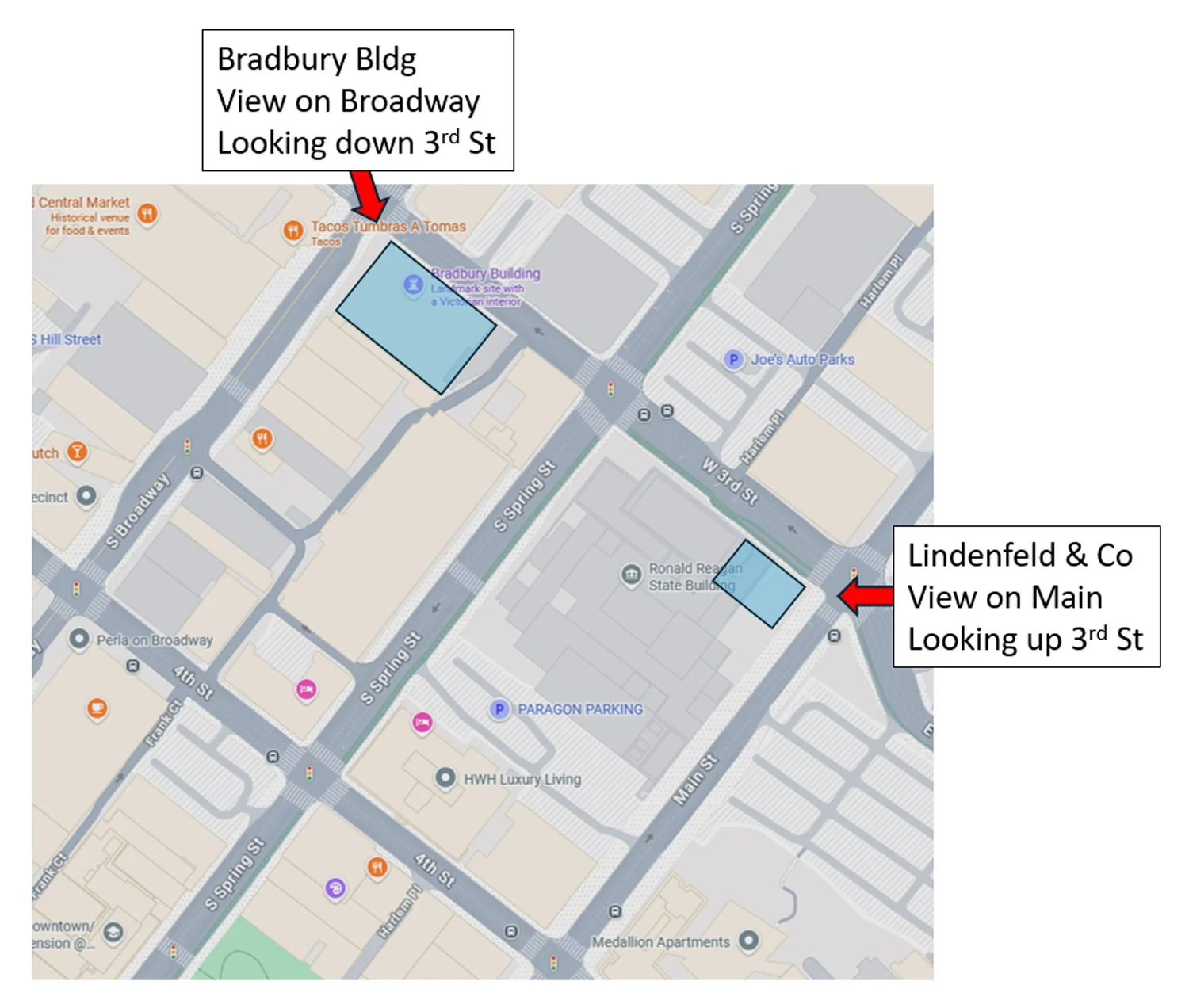
The final image is the same corner in 2026. The site is the current location of the Ronald Regan building that was built in 1990.


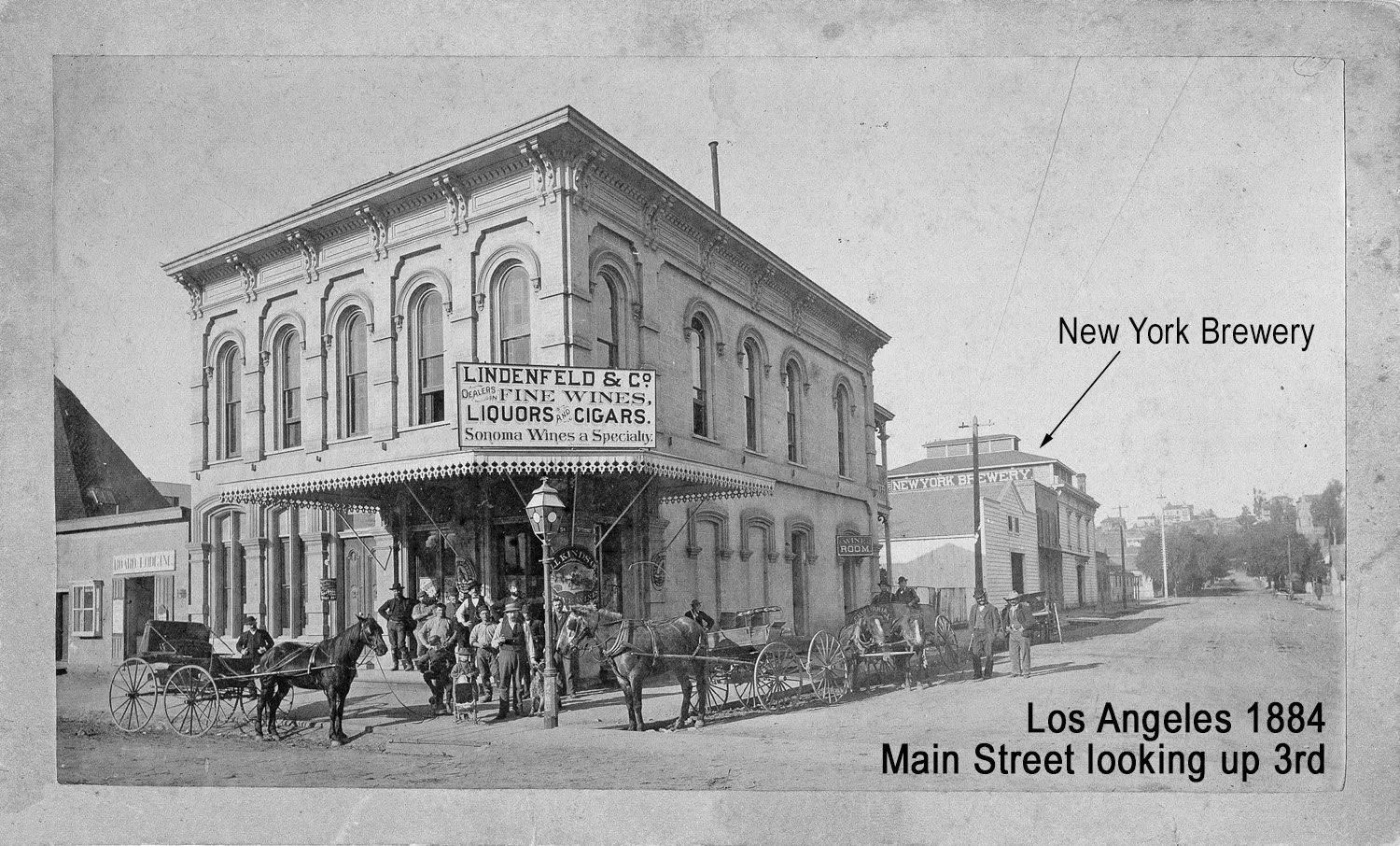
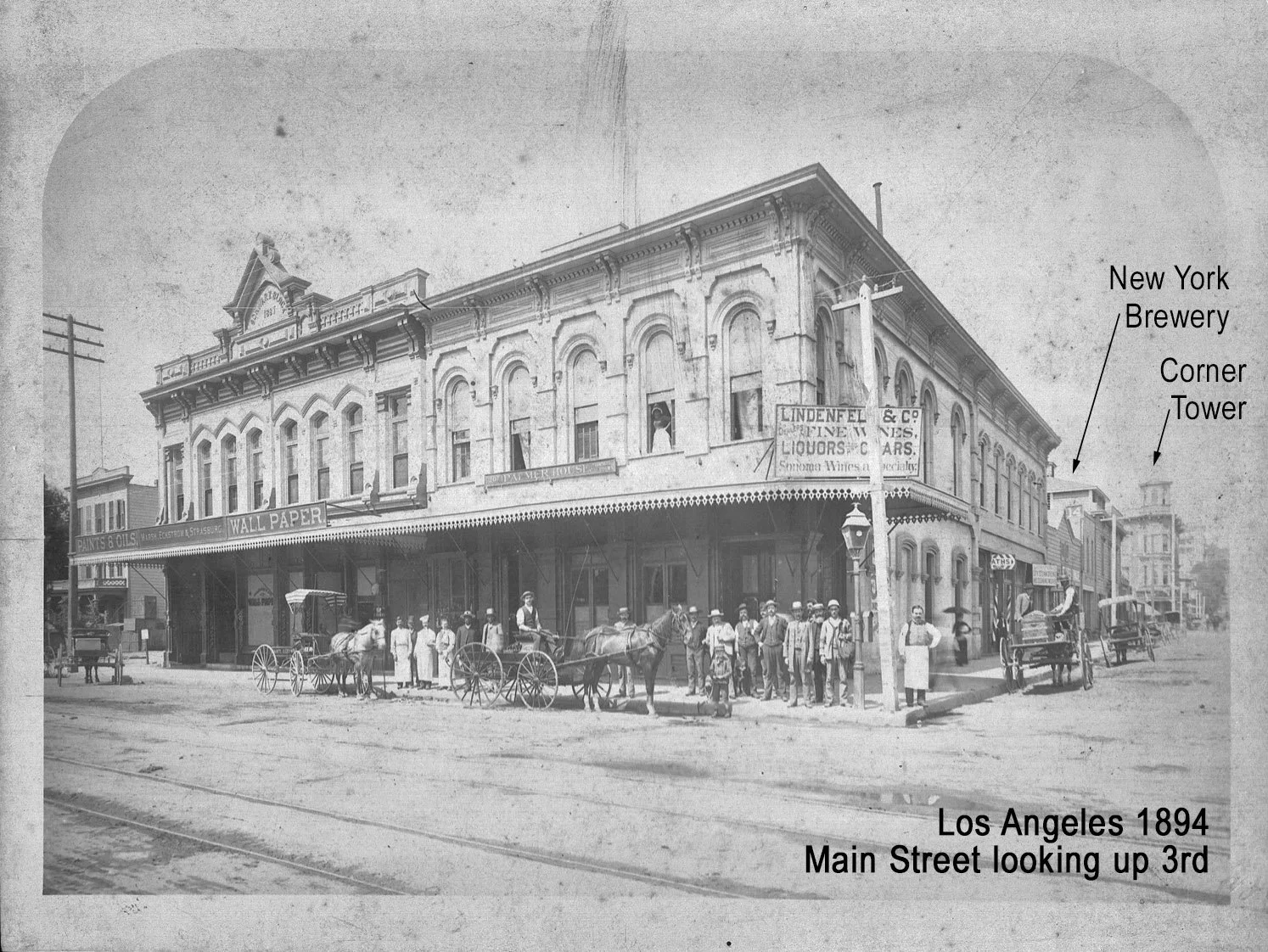
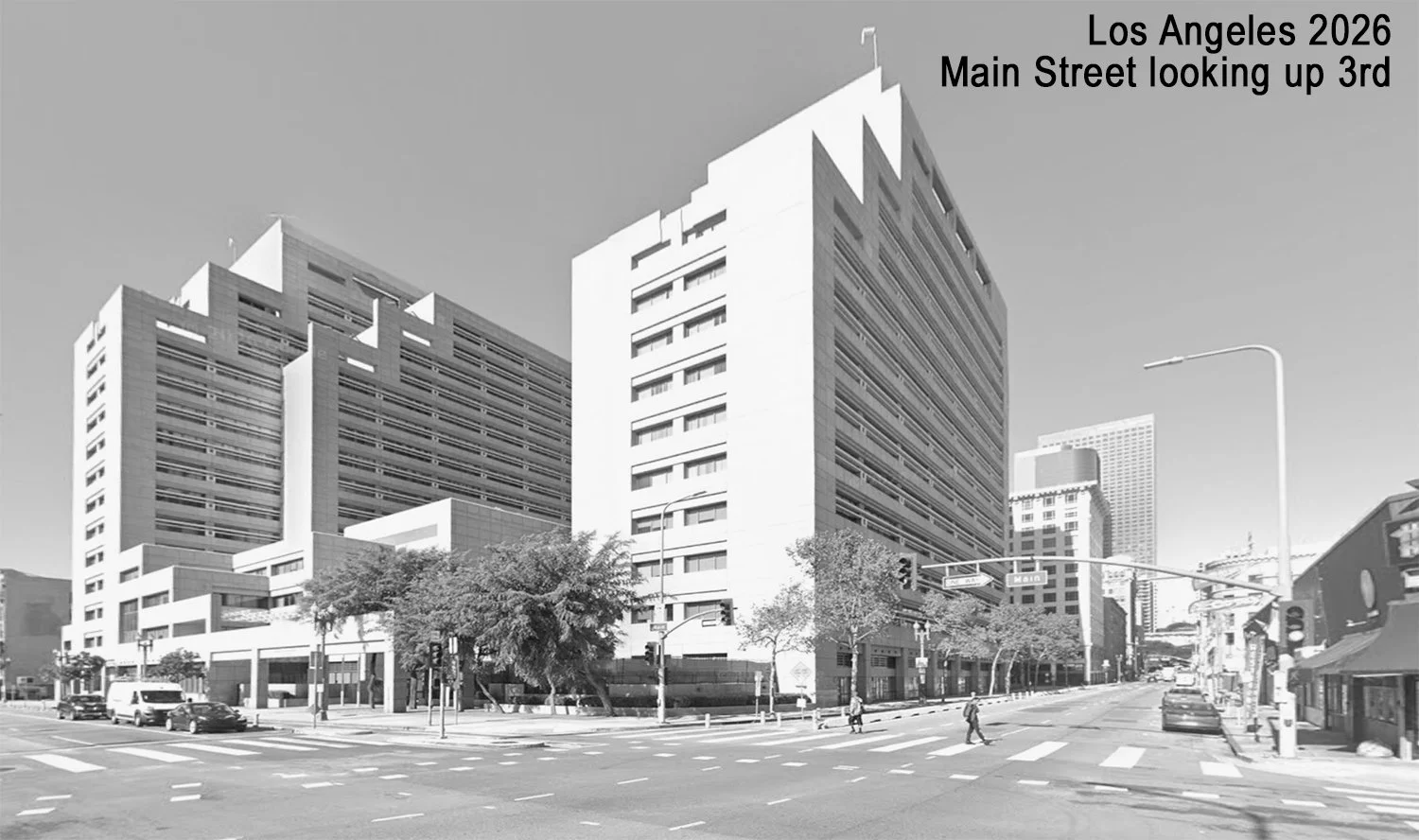
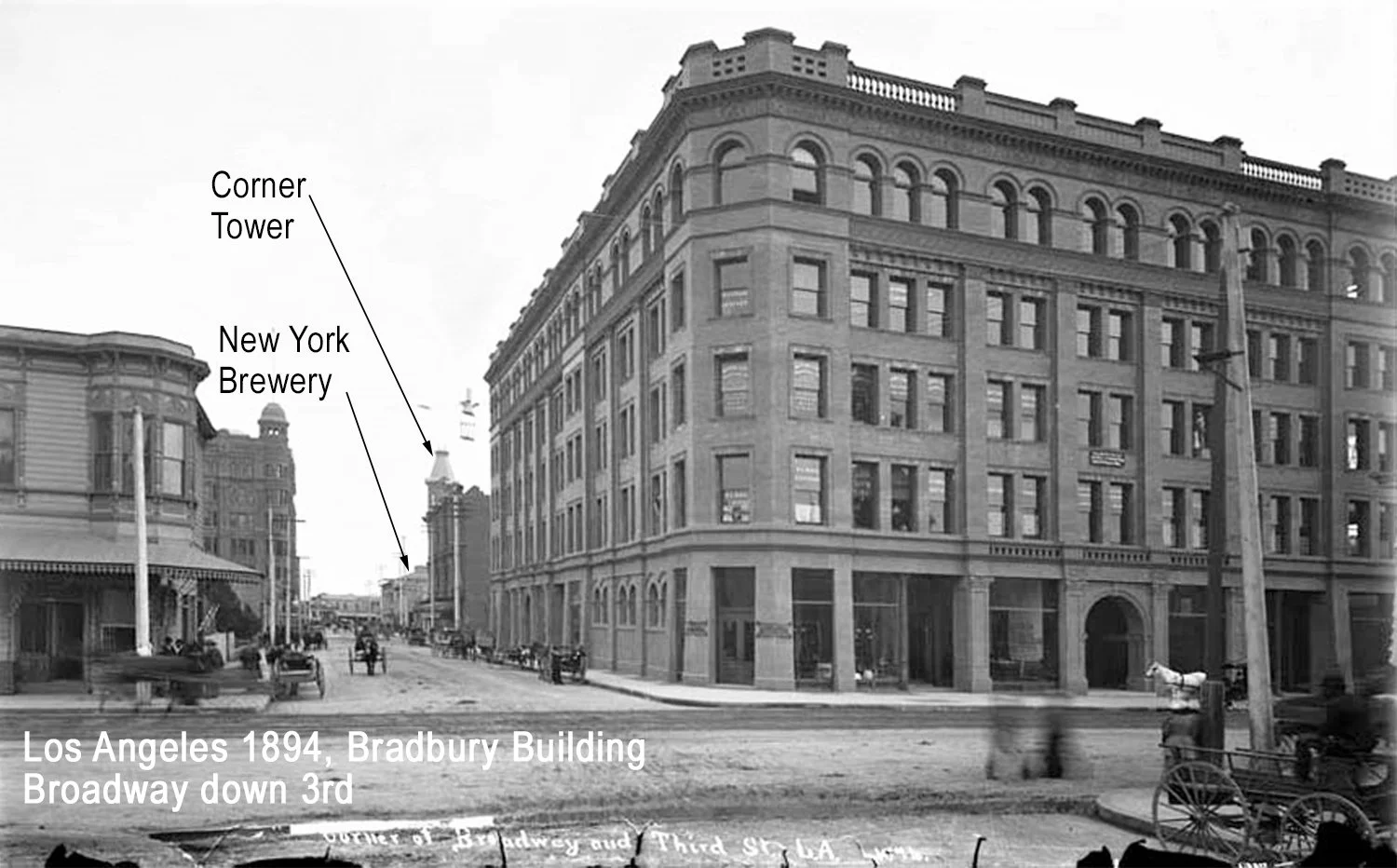
When I am researching family history I always start out as a sceptic until I can verify the facts. The USC database describes the location of the Lindenfeld & Co Building but there are no landmarks or street signs in the photo to confirm it. I was thrilled when I found the photo below of the Bradbury Building because it confirmed the actual location and date of the second Lindenfeld & Co Building photo.
The image of the Bradbury Building is taken from Broadway looking down 3rd street from the opposite direction of the earlier photos. The photo is dated 1894, just one year after the Bradbury Building was completed. If you look down 3rd you see a corner tower on one building and further down the block, the distinct mansard roof of the New York Brewery. Both landmarks are visible in the second photo of the Lindenfeld & Co Building.
Based on these images I was able to mark up a google maps image to show the exact location of the two buildings and the direction that the photos were taken.


A Pipe and a Gun
So, enough context, let's talk about the two artifacts.
Both were in a box that was given to Terri Laurman from Sister Mary Joahnn Lindenfeld. She got them from her mother Mary but based on the age very likely they came from her grandparents Andrew Lindenfeld and Mary Sturm.

The first item is a small carved pipe in the shape of a woman's leg and boot. It looks like a pipe, but it actually was designed to hold a small cigar called "cheroot" that would be placed in the end in the small bowl. In this era cigars and cigarettes where hand rolled and without filters. Manufactured cigarettes would not be become popular until the 1920's. The ivory colored material is called meerschaum and is a lightweight porous mineral that can be carved. The meerschaum absorbed oils, cooled down the smoke and over time it would yellow. The whole purpose of a meerschaum cigar holder was to improve your smoke, keep tobacco out of your mouth and ashes off your clothes. Based on the ornate design and carrying case this likely was from the late 1800's and could have come along with the Lindenfelds when they immigrated from Germany.

The second item is a single shot derringer. It has a brass frame, a dark octagonal barrel and a wooden grip. It held a single .41 rimfire shell that was loaded by cracking the barrel to the side as shown in the picture below. These pistols were manufactured in Massachusetts by the Brown Manufacturing Company between 1866 and 1873. If you look closely, the top barrel is stamped with the name "Southerner". This was considered a "Post- Civil War" marketing move to make the pistol attractive to buyers in the former Confederacy during Reconstruction. Roughly 16,000 of these pistols were manufactured.
So, Whose Gun is it Anyway?
The question that we can't answer definitively is who the pistol and cigar holder belong to. Did they belong to Mary or Andrew? Terri felt the derringer was a woman's gun and that it must have been Mary's. In the 1880's it was rare for woman to smoke in public, so perhaps the pipe belonged to Andrew.
Or if you prefer a more colorful history, imagine Mary Sturm leaning on the bar, boldly smoking her cigar in public, with a derringer holstered in the waist band of her skirt.
Zoom in on the original photo and it might tell a slightly different story. The man in front has a pipe in one hand and is holding back his dog with the other. It looks like he brought a few of his kids to work that day. Perhaps its Andrew Lindenfeld, the bartender, a newly immigrated German national, trying to make his way in the dusty streets of Los Angeles, with his pipe for comfort and his derringer for security.
