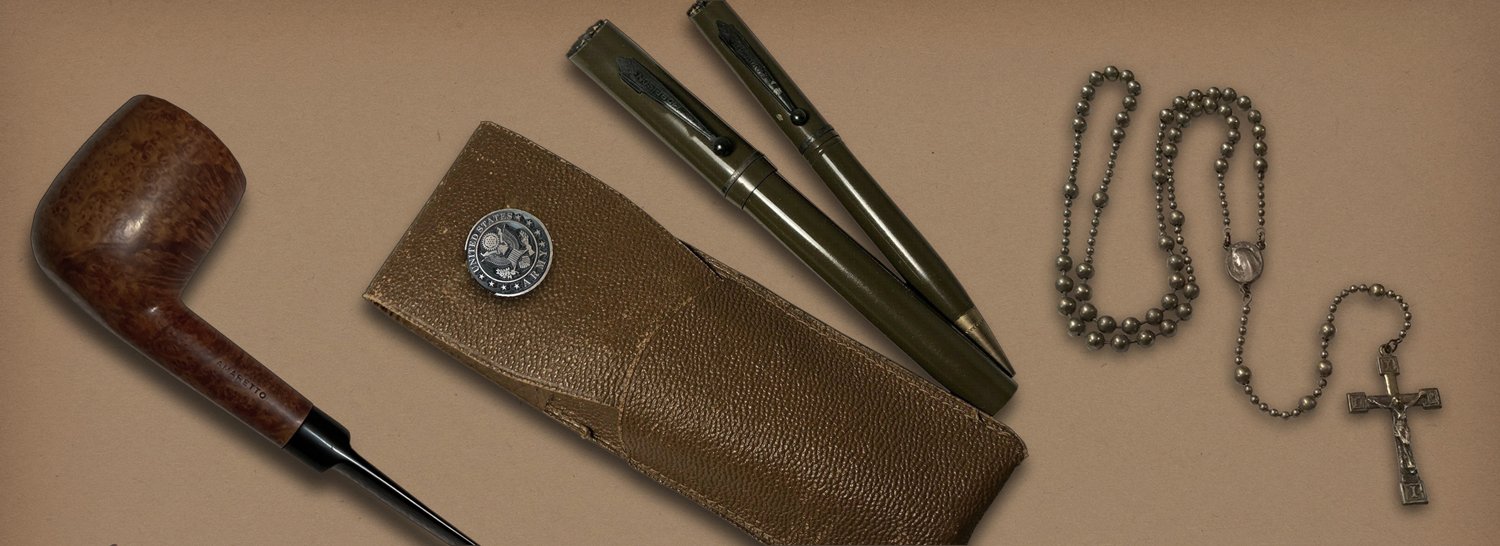
A Pipe, a Pen Set and a Rosary
This project has always been about story telling.
My brother Jim started the story five years ago when he created an online archive of documents regarding my dad’s brother, Jack Emme, who was killed in Normandy during World War II. That archive was filled with letters, photos and objects. It was a complicated puzzle with lots of missing pieces, but the incomplete picture it showed of Jack's military service was more vivid than anything shared with us as kids.
Finding the missing pieces
"Jack, A Soldier's Scrapbook" is my effort to fill in those missing pieces and present Jack's story in the form of a graphic novel. This last month I finished the "research phase" of the project. The final step of this phase involved researching Jack's military records and I wanted to share where that journey took me.
NARA and the Big Fire of 1973
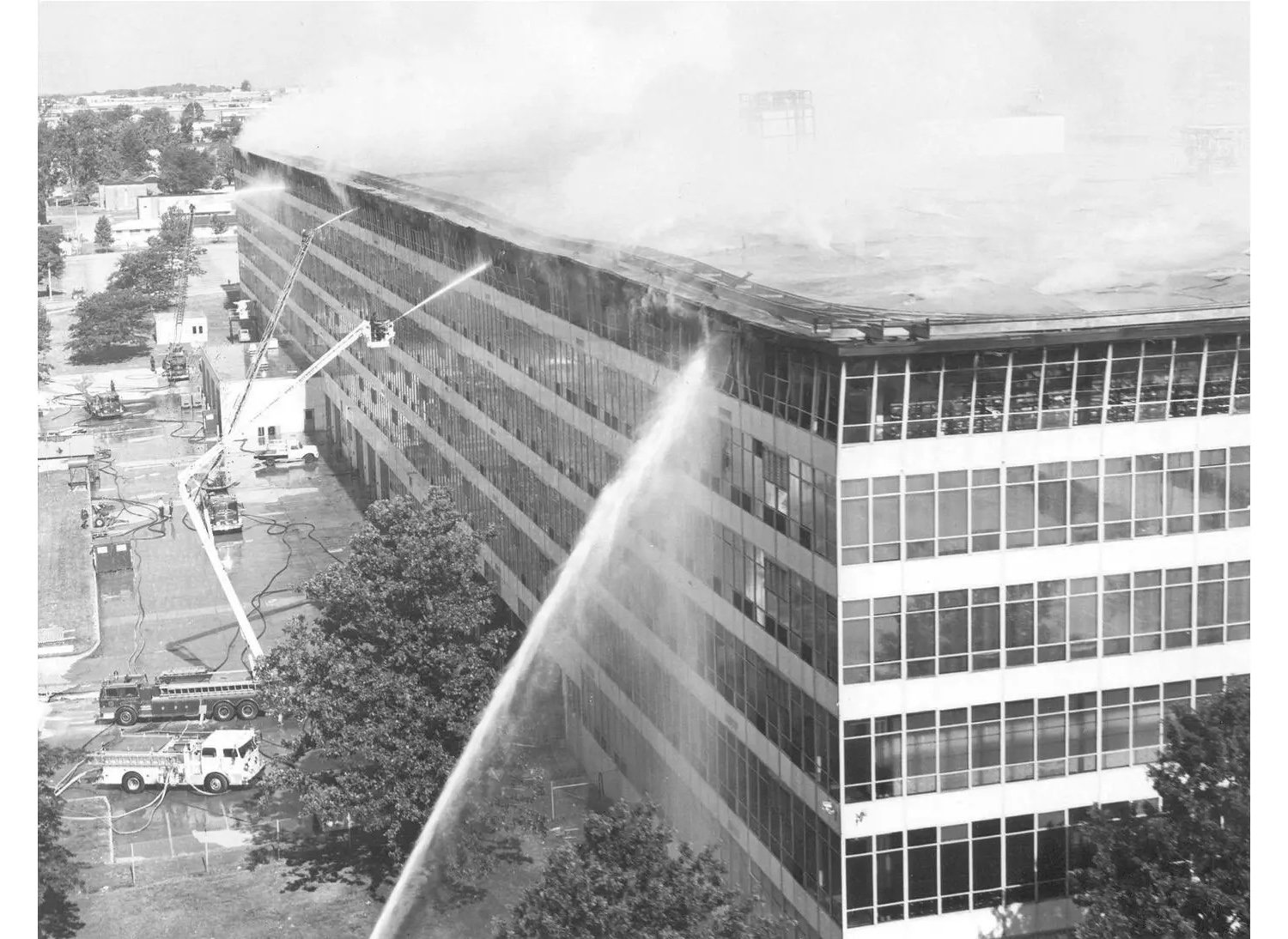
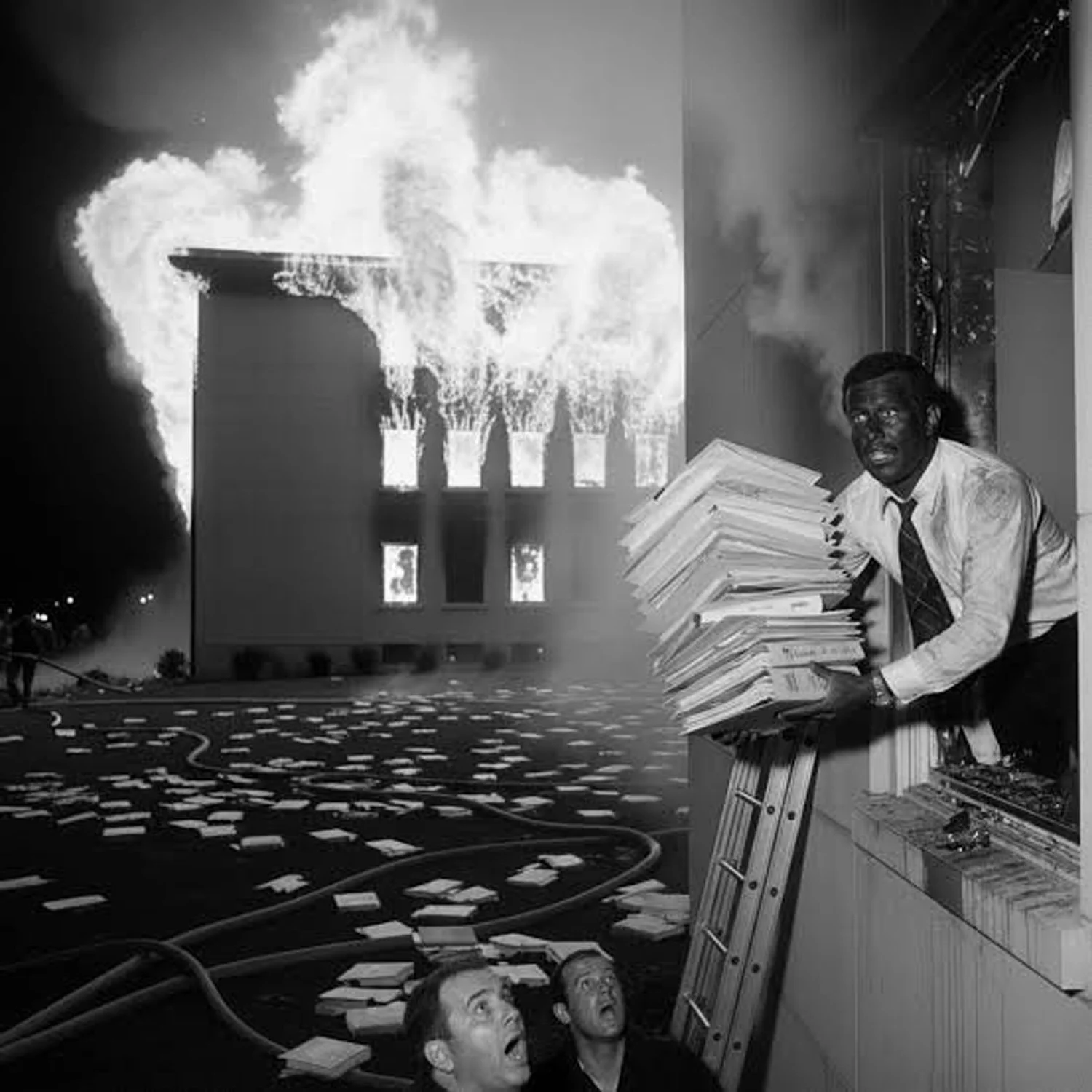
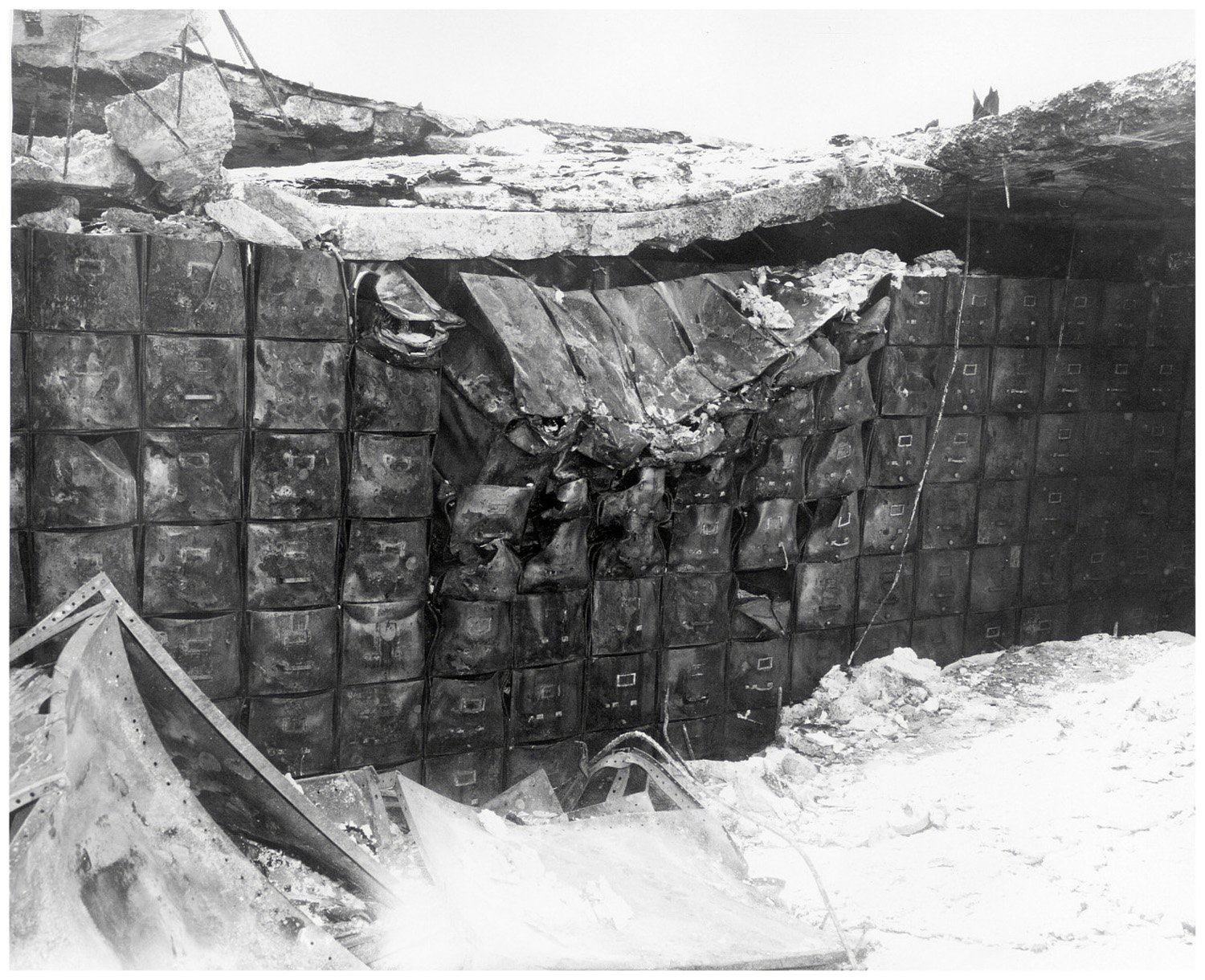
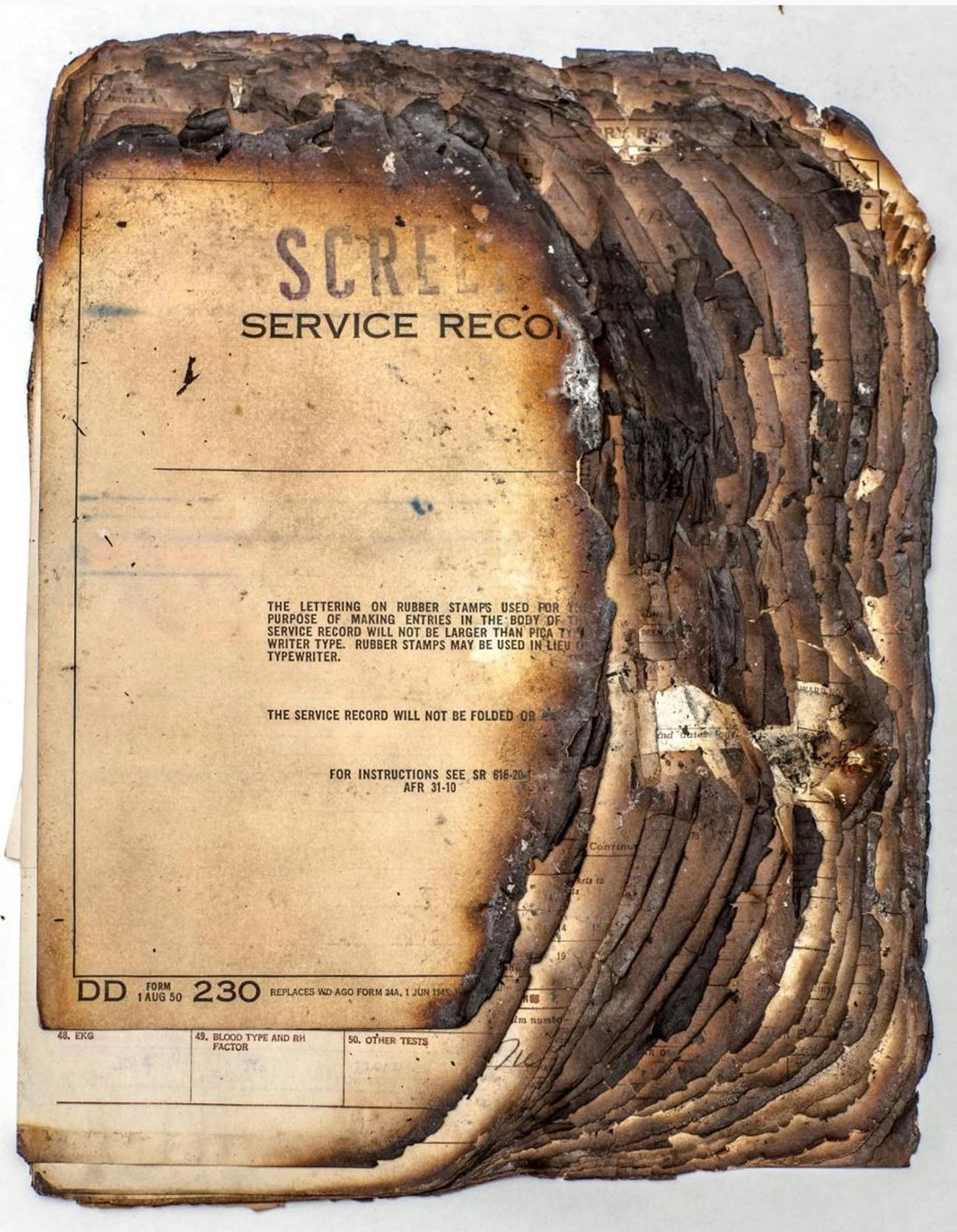
The biggest challenge for anyone researching Army military records is a fire that happened in the seventies. The National Personnel Records Center (NPRC) is the centralized location for military personnel records. The consolidated archive building was built in Overland, Missouri in 1966. On July 12, 1973, a fire started on the sixth floor of this facility. Shockingly the building had no fire suppression system, but this was not uncommon in that era because water was considered a bigger risk than fire in a building full of paper records. By the time the smoke had cleared 80% of all Army personnel records from 1912 to 1960 had been destroyed. These records were key to confirming a soldier's service for medical care and benefits. A massive records restoration and modernization process began that resulted in the current NPRC located in St. Louis, Missouri. The archive is managed by the National Archives and Records Administration (NARA).
Getting Help from Redbird Research
As I started to review the forms required for a records request, I crossed paths with an expert military researcher named Lori Berdak Miller who owns the company Redbird Research. She lives in St. Louis and explained that there are some records you can only access by reviewing the microfilm in person at the NPRC. She also recommended that I request something called an IDPF (Individual Deceased Personnel File) to get more details about what happened after Jack’s death. I explained that my primary goal was to see what additional information might be available about Jack's service and to try and validate a specific story about Jack's final days in France. She agreed to help.
Company Rosters

Jack was in the 28th Infantry Division, 112th Regiment, Third Battalion. The Third Battalion was made up of five companies (HQ, I, M, L & K) and Jack was in Company L. The Co L Roster above was published on September 1, 1943, while the Division was stationed in Camp Pickett, Virginia. Jack's Division was going through mountain and sea training at that time, preparing for the invasion of France. Due to the NPRC fire this is the last roster for Co L on record during Jack's service. In early October the Division headed to Wales. Certainly, the roster would have continued to change, but it is notable that there is no other soldier on the roster with a last name similar to his. That is one of the puzzle pieces which I will explain later.
Morning Reports

A Morning Report (MR) is a daily account of the personnel status at the Company level. Your name only got mentioned if something happened to you. The first week in August was rough for the 28th Division. It was their first combat experience and what some referred to as “Hedgerow Hell”. They had over 750 casualties in one day. The Germans began pulling back and the Division was on the move, so things were chaotic.
MR dated August 7, 1944 – No mention of Jack
MR dated August 17, 1944 – Jack is listed as "Above EM Dy to MIA 7 Aug 44 dropped to strength" which means "Above Enlisted Men present for Duty have been moved to Missing in Action on August 7, 1943".
MR dated Sept 1, 1944 – Jack is listed as "Reported dy to MIA 7 Aug 44 on MR dated 17 Aug 44, Now corrected to read dy to KIA 7 Aug 44" which means Jack's record was corrected moving him from MIA to KIA on this date.
These Morning Reports add a bit more detail to information we already had in the form of telegram notices shown below sent to Jack's parents in September.

Two Letters

These two letters from my brother's online archive have been a source of a lot of head scratching for me.
The first letter is from Paul Emme, Jack's father, and was sent to the Chaplain of Co L. It was written in February, six months after they were notified of Jack's death. Through back channels they were able to find out where he had been buried. Paul is requesting help from the Chaplain to get further details about Jack's death and to expedite the return of his personal belongings.
The second letter is from "Roy" mailed from “Camp Lucky Strike”. When I first read this letter, it felt like a fake. It is a typed copy of a letter with all personal information removed, so it is anonymous. The paragraph about Jack comes up randomly in what reads like a personal note from a soldier to his girlfriend. Several of the dates in the letter are incorrect and the description of Jack storming a machine gun nest sounds like a scene from a movie.
My opinion about the letter has changed over the years and I will explain why.
The letter is dated May 29, 1945. Germany surrendered and a ceasefire began in Europe on May 9th. Camp Lucky Strike was a real place on the north coast of France near Le Havre. It was a massive tent city and demobilization camp for soldiers waiting to be sent home from the war. At Camp Lucky Strike the war was over and men had time on their hands while they waited to get back home.
Keep in mind that Paul's request was not unique. The 28th Division fought for another eight months after Jack died, with 1,901 “Killed in Action” and 2,599 “Missing in Action”. The individual Companies had to be getting hundreds of letters from parents who had lost sons and were seeking more information.
My opinion is that the Chaplain or some other official within the Company got the assignment to type up letters that could be sent back home to parents based on whatever information they could get from soldier's recollections. This letter was drafted as a response to Paul's request. Roy’s description of Co L’s journey from Tre-glog to St. Lo was very specific and accurate. His description of Jack’s brave act was perhaps embellished in its details but the event itself is backed up by several other sources I discovered along the way.
The Road to Gathemo

The map above shows the route the 3rd Battalion took from August 2nd to August 7th. This is based on the 3rd Battalion 112th Infantry's History document. The following sources gave more insight into the events of August 7th.
28th Division History
This document was published right after the war and provides a detailed history of the 28th Division’s experience during World War II. It specifically describes the 3rd Battalion facing ten machine gun nests along the Gathemo-Vire Highway on August 7th.
3rd Battalion 112th Infantry History
This document is a collection of soldier's day for day recollections from Jack’s Battalion during World War II. It identifies Co L as leading the assault on August 7th and describes a Private Emmy charging a machine gun nest and taking it out single handedly. This is remarkably close to the description in Roy's letter. It is notable that this soldier's recollection was only about Jack's brave act, not about how he died.
Based on the Morning Reports we know Jack was reported MIA on August 7th and several weeks later confirmed to have been KIA the same day. "Emmy" is a common misspelling of our family name and there is no "Emmy" in the Company Roster from earlier in the year. I could find no other records online or with NARA for a Private Emmy serving during World War II.
Based on all this I think we can be confident that the recollection of these two soldiers about Jack's final day in France are reasonably accurate.
The Return of Personal Effects
The second half of Paul's letter makes a request to expedite getting their son's personal belongings back. The IDPF file had a number of documents showing the path home for Jack’s belongings.

The items listed above were returned to his parents in three different packages. One of those was a single check for $4.00. Some items were identified as damaged. It took eight months to have all these items returned. It took another four years to have Jack's remains moved from the temporary cemetery in Garron to his final resting place at the St. James Military Cemetery in France.
The online archive is thick with documents from this period of time. Various family members communicated with friends, government agencies and insurance companies. It is hard to imagine how this slow resolution of both personal and business issues affected the family’s grieving process.
The Pipe, the Pen Set and the Rosary
First a disclaimer, the images at the top of the page are not Jack's actual personal effects. They are images of similar items that were listed in his IDPF document. I focused on these for a few different reasons.
The Pipe
I knew Jack smoked based on comments in his letters, but I had no idea he smoked a pipe. Jack's dad, Paul, smoked a pipe. We called him Pop. The smell of pipe smoke and that pipe clenched in his teeth is etched in my childhood memories of him. Pipe smoking was not common for soldiers because it required more work. You had to keep the tobacco dry; you had to clean out your pipe with a brush and tamp down the tobacco to light it. Pipe smoking implies a quiet moment of leisure, a time for quiet contemplation.
The Pen Set
Jack was a prolific letter writer. We have seventeen of his letters but clearly there were more. The letters were indispensable for tracking Jack's journey across the USA, UK and France, but If you were expecting great insight into his opinions about the war or his role in it you likely will be disappointed. Sure, he grumbled about the Army and the censors, but his letters were filled with conversations about people's health, the weather and anniversaries. His most animated comments were saved for requests for more Fanny Farmer Fudge or pestering his brother Bill to write more often. His focus when he was writing was about home and family, not war.
The Rosary
We were all raised Catholic. Pop attended early morning mass regularly. Once a year on the anniversary of his wife Margaret's death he had us all get together with our cousins, aunts and uncles to attend mass and go out to breakfast. It is interesting that there was not a similar celebration for his son Jack. Perhaps too painful of a memory to remember someone's death taken so early. The fact that Jack carried a rosary tells us that he had faith, and we can only hope that it gave him some comfort during what had to be the most challenging time in his short life.
So, if it’s all about Story Telling….
….why not take these three objects, combine them with other facts we know about Jack and show how they might add authenticity to his story? This seems like an appropriate way to end the research phase of this project and begin the story telling phase.
“It's night and the green hills surrounding Camp Tre-glog are dark and damp. There is a flickering light coming from the window at the end of the nearest Quonset hut. Jack is up late, having one last pipeful while he writes a letter home. Bud is snoring in the bunk above him. They had a few days off together and made a quick trip to London on the train to visit some pubs, see a movie and get some pictures taken. It rained the whole time. In the letter Jack promises to send his mom a couple prints of the pictures as soon as he has them. As he seals up the envelope, glances at his rosary hanging from a hook on his bed post and thinks about his family, whom he misses very much. He tamps out his pipe, turns off the light and crawls into bed, trying not to think too much about what tomorrow will bring.”
Thank you for following along.
